

A single visit to Goa is all it takes to fall in love with the filtered sunlight through the coconut groves and the tactile warmth of sun-baked laterite stone. Goa’s architectural cadence gracefully balances slow Portuguese heritage with tropical modernism. As a result, for the NRI community across Dubai, London, New York, and Singapore – Goa has graduated from an occasional sun-drenched holiday getaway into India’s most compelling luxury real estate frontier.

Goa’s NRI Advantage: Why Global Indians Choose the Coast
Investing in Goa is no longer merely a lifestyle indulgence. It is a calculated portfolio play anchored by dual-engine returns. While primary metropolitan centers offer modest residential yields of 2% to 3%, prime Goan holiday estates routinely generate 6% to 8% gross rental yields via curated luxury vacation rental management, paired with 12% to 18% annual capital appreciation.
- The Infrastructure Shift: Chiefly, the expansion of Manohar International Airport (MOPA) in North Goa, alongside upgraded arterial corridors and bridges across the Mandovi and Zuari, has dramatically collapsed transit times.
- The Low-Density Shift: Secondly, NRI homebuyers have pivoted away from congested urban high-rises in favor of private, low-density enclaves—homes where biophilic architecture, private plunge pools, and expansive verandas take center stage.
- Favorable Currency Arbitrage: Finally, favorable exchange rates against the Indian Rupee allow NRIs and OCIs to acquire expansive, high-specification private estates with notable purchasing power.
Where to Buy: Evaluating Prime Micro-Markets

| Micro-Market | Architectural Character & Vibe | Prime Appeal | Target Investor |
| Pilerne | Verdant hillside tranquility, heritage chapels, dense forest buffers. | Minutes from Candolim & Panaji; unblemished village charm; strict low-density zoning. | Design-focused NRIs seeking privacy, nature, and capital appreciation. |
| Assagao | Restored Portuguese mansions, designer boutiques, gourmet dining. | High social visibility; bustling lifestyle epicenter. | Lifestyle buyers prioritizing high-velocity short-term rentals. |
| Reis Magos & Nerul | Dramatic coastal bluffs, Mandovi riverfront panoramas. | Striking maritime vistas; close proximity to capital city culture. | Ultra-luxury buyers focused on water frontage. |
| Siolim & Moira | Riverine calm, bohemian art enclaves, historic backwaters. | Slower pace; lush hinterland landscapes. | Creative entrepreneurs and long-stay seasonal residents. |
Spotlight on Pilerne: The Architectural Sanctuary
Hidden beneath the forested ridge of the Saipem hills, Pilerne has emerged as North Goa’s most refined residential pocket. It occupies a rare sweet spot. It is shielded from the clamor of coastal tourism, yet positioned just 10 to 15 minutes from the coast of Candolim and the cultural energy of Panaji.
And within this verdant valley, boutique enclaves like The Windsouls, Pilerne set a benchmark for contemporary coastal living. Designed as an exclusive collection of limited 4 BHK nature-immersed villas, the development marries monolithic stone textures with sweeping glass spans, cantilevered terraces, dedicated private pools, and independent staff quarters. For the overseas buyer, it offers the balance of an architecturally significant private sanctuary backed by seamless, gated estate management.
The NRI Legal Framework: Navigating FEMA & Title Diligence
For Non-Resident Indians (NRIs) and Overseas Citizens of India (OCIs), purchasing residential property in India is a clear, statutory right under the Foreign Exchange Management Act (FEMA, 1999). However, precision in due diligence remains essential.
Statutory Rule: NRIs and OCIs can freely acquire any number of residential or commercial properties in India. Although, they are strictly prohibited from purchasing agricultural land, plantation properties, or farmhouses without specific Reserve Bank of India (RBI) approval.
Essential Due Diligence Checklist for Goa:
- Sanad (Land Conversion Certificate): Firstly, confirm the land is formally classified for non-agricultural/settlement use.
- Form I & XIV: Scrutinize the government Record of Rights to verify the complete chain of historical title and physical possession.
- 30-Year Title Search & Encumbrance Certificate: Also, ensure the property is free from adverse claims, bank mortgages, or tenancy litigation.
- Portuguese Civil Code Compliance: Additionally, in Goa, succession laws dictate community property rights among heirs. Ensure all legal heirs have executed formal release deeds to guarantee an unencumbered conveyance.
- Goa RERA Validation: Verify the project’s active registration on the official Goa RERA portal before executing binding agreements.
Financial Structuring & Repatriation
Funding a property in Goa from abroad requires adherence to straightforward banking channels regulated by the Reserve Bank of India.
- Account Requirements: Transactions must be routed through inward remittances via an NRE (Non-Resident External) or NRO (Non-Resident Ordinary) bank account. Direct foreign currency drafts and cash transactions are prohibited.
- Home Loans: Leading Indian private and public banks offer home loan facilities to NRIs for up to 75–80% of property value, subject to standard overseas income verification.
- Repatriation Under FEMA: NRIs can freely repatriate the original investment capital remitted through NRE accounts. Sale proceeds deposited into an NRO account can be repatriated up to USD 1,000,000 per financial year, supported by Form 15CA and 15CB certifications from a Chartered Accountant.
NRI Taxation Decoded
Rental Income
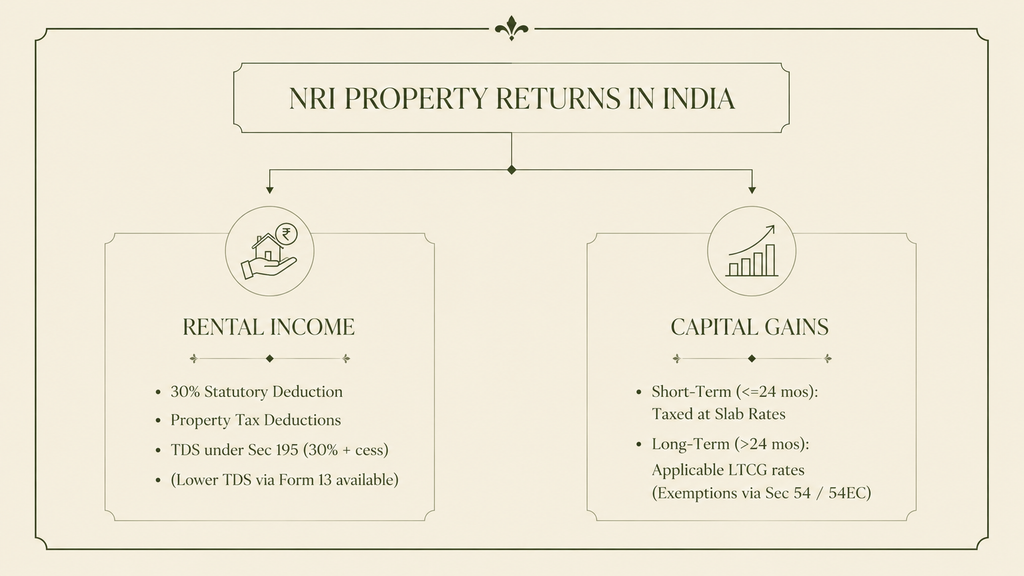
Rental yields are taxed under “Income from House Property.” As a result, owners benefit from a flat 30% statutory deduction for repairs and maintenance, alongside deductions for municipal property taxes and mortgage interest. Rental remittances are subject to withholding tax (TDS) under Section 195, which can be reduced by applying for a lower-tax withholding certificate (Form 13).
Capital Gains
- Short-Term Capital Gains (STCG): Properties held for 24 months or less are taxed at applicable individual income tax slab rates.
- Long-Term Capital Gains (LTCG): Properties held for more than 24 months qualify for long-term capital gains tax rates. Tax liabilities can be offset by reinvesting gains into residential property under Section 54 or specified capital gains bonds under Section 54EC.
Frequently Asked Questions
Only if the land parcel has received formal conversion (Sanad) to non-agricultural/settlement status. If the underlying title remains registered as agricultural or orchard land, an NRI cannot acquire it without prior RBI clearance.
Most modern NRI investors partner with established luxury villa developers that provide full-service property management—overseeing landscape maintenance, pool sanitation, round-the-clock security, and guest hospitality for rental operations.
No. An NRI can execute a registered Power of Attorney (PoA) in favor of a trusted representative or legal counsel, duly notarized and adjudicated by the Indian consulate in their country of residence.
A home in Goa represents more than a balanced asset on a balance sheet. It is a legacy of intentional living—a private haven where refined tropical architecture meets coastal calm. Discover the design philosophy and hillside vistas of The Windsouls, Pilerne, and claim your piece of coastal luxury.